- 2 Stearns Road-Suite A
- Storrs, CT 06268
- Business Hours
- Mon-Fri : 7am To 5pm
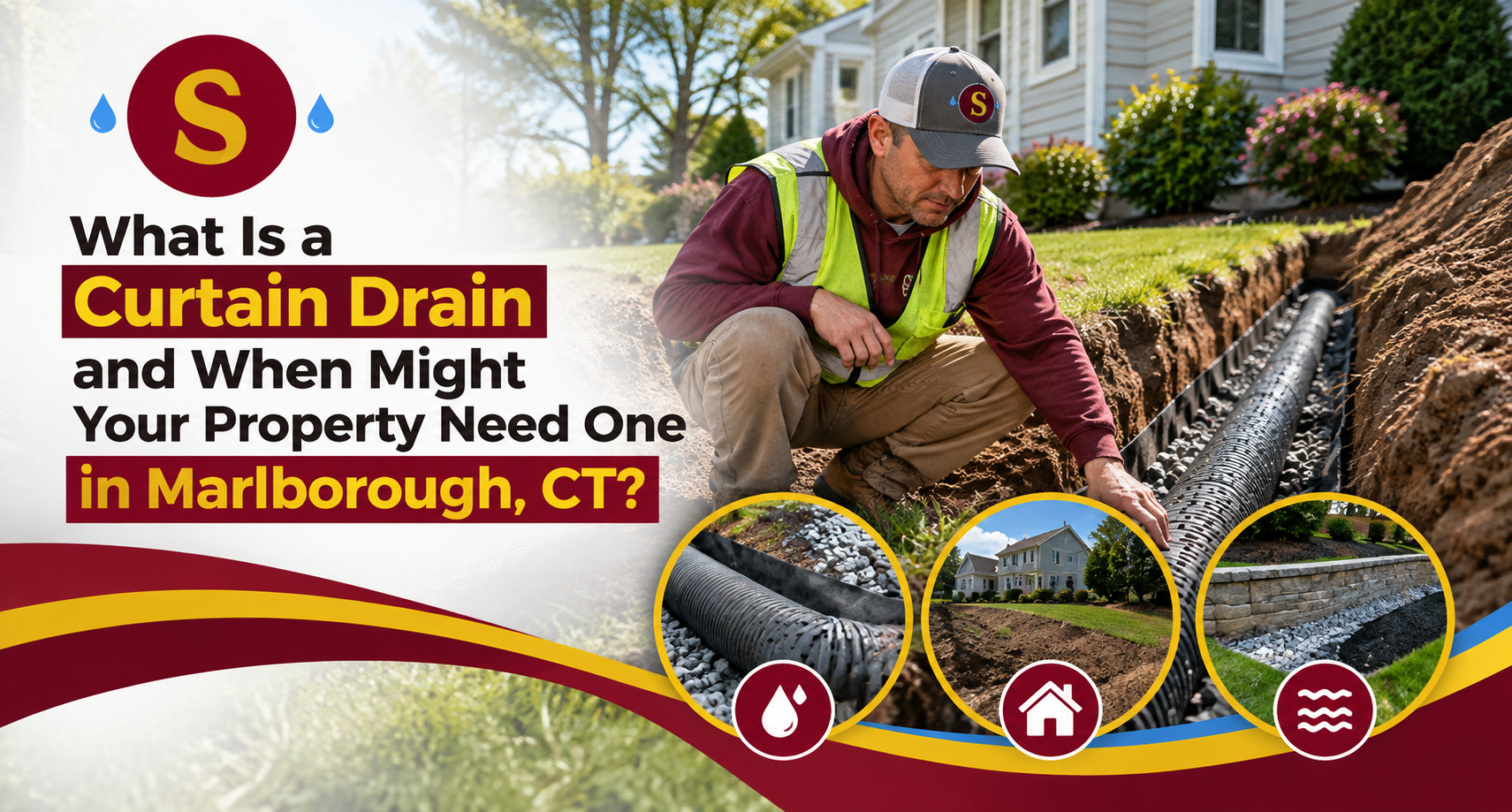
Water can become a serious property problem when it does not have a clear path to move away from your home. You may notice standing water in the yard, muddy areas, soil erosion, or water collecting near a foundation after heavy rain. One drainage solution that can help in certain situations is a curtain drain.
A curtain drain is an underground drainage system designed to intercept groundwater or surface water and redirect it away from an area where it is causing problems. For homeowners in Marlborough, CT, understanding how this system works can make it easier to recognize when additional drainage may be needed.
What Is a Curtain Drain?
A curtain drain is a type of subsurface drainage system installed in a trench, often across a slope or in an area where water naturally travels. A perforated drainage pipe is placed in the trench and surrounded by suitable drainage material.
As water moves through the surrounding soil, the drainage system collects it and provides a controlled path for it to move away from the problem area.
Drainage Septic Pros specifically provides curtain drain installation for residential yard drainage and has completed a 200-foot curtain drain project in Marlborough, including perforated pipe installation. The company notes that proper drainage can help address puddling and erosion.
Why Does Water Become a Problem?
Rainwater does not always soak evenly into the ground. Soil type, property slope, landscaping, compacted areas, and existing drainage can all affect where water travels.
If water repeatedly follows the same path, it may eventually create muddy areas or wash soil away. On a sloped property, groundwater can also move toward a home or another part of the yard where moisture is unwanted.
A drainage system can help intercept water before it reaches the area where it creates problems.
How Does a Curtain Drain Work?
The basic idea is relatively simple. A trench is created along a planned drainage path. A perforated pipe is installed within the trench, allowing water to enter through openings in the pipe.
The collected water can then be directed toward an appropriate discharge point, depending on the property’s layout and drainage requirements.
Because every property has different elevations and soil conditions, the location, depth, length, and configuration of a curtain drain should be determined based on the actual water-flow problem rather than using the same design for every yard.
What Are Signs That Your Property May Need One?
Homeowners may want to have their drainage situation evaluated if they repeatedly notice:
- Standing water after rainfall
- A section of lawn that stays wet
- Muddy areas that return after storms
- Soil washing away on a slope
- Water moving toward a home
- Persistent puddling in the same area
- Erosion along a natural drainage path
One isolated puddle does not necessarily mean that a curtain drain is required. The important factor is whether the water problem is persistent and how it is affecting the property.
Can a Curtain Drain Help With Yard Erosion?
In some situations, yes. Fast-moving water can carry soil downhill, gradually creating channels and uneven areas. This can become particularly noticeable on sloped properties.
By intercepting water before it travels across vulnerable areas, a properly planned drainage system can help manage the flow. Other measures, such as vegetation, grading, stone, or additional drainage components, may also be considered depending on the site.
The objective is to manage water rather than simply cover up the area where erosion is occurring.
How Is a Curtain Drain Different From a Foundation Drain?
Although both systems use underground drainage, they address different situations.
A foundation drain is generally designed to manage water around the foundation of a building. Drainage Septic Pros describes foundation drains as systems installed around the perimeter of a foundation, using gravel and perforated pipe to move water away from the building.
A curtain drain, on the other hand, is generally used to intercept water before it reaches a particular area of the property. The right system depends on where the water originates, where it is going, and what part of the property needs protection.
Does Property Slope Matter?
Property slope is an important part of drainage planning. Water naturally moves downhill, so a sloped yard can sometimes direct groundwater or surface runoff toward areas where it is not wanted.
A curtain drain can be positioned to intercept water along a slope and redirect it toward a suitable outlet. However, the drainage path must be planned carefully so that the collected water does not simply create another problem somewhere else.
This is why evaluating the overall property is more useful than focusing only on the wettest spot.
What About Soil Conditions?
Soil affects how quickly water moves through the ground. Some soils allow water to drain relatively quickly, while others retain moisture for longer periods.
Compacted soil can also prevent water from moving efficiently into the ground, causing more surface runoff. Before installing drainage, it is helpful to understand the site’s soil and existing water movement.
A professional evaluation can help determine whether a curtain drain is appropriate or whether another drainage approach would better address the problem.
When Should a Homeowner Consider Professional Drainage Help?
If standing water, erosion, or wet areas continue to return after rain, the problem may require more than a temporary fix. Moving soil or adding fill without understanding the source of the water may only change where the water collects.
A professional can evaluate the slope, soil, existing drainage, structures, and likely path of the water before recommending a solution.
Homeowners looking for underground drainage pipe repair in Coventry, CT can also see why identifying the condition and location of underground drainage components is important when addressing water-flow problems.
How Can Proper Drainage Protect Your Property?
Good drainage can help reduce standing water, limit erosion, and direct excess moisture away from areas where it can cause problems. It can also make a yard easier to use and maintain.
However, drainage should always be planned according to the property’s specific conditions. A curtain drain may be appropriate for one yard while another property may need a foundation drain, channel drain, catch basin, grading adjustment, or a combination of solutions.
Drainage Septic Pros provides several drainage solutions, including curtain drain installation services in Connecticut, along with foundation drains, channel drains, catch basins, culverts, and other drainage services.
Understanding the Problem Comes First
A curtain drain can be a useful way to intercept and redirect unwanted groundwater or surface water, but the first step is understanding why water is collecting in the first place.
For homeowners in Marlborough, CT, recurring puddles, erosion, muddy areas, or water moving toward the home are reasons to take a closer look at the property’s drainage. With the right evaluation, homeowners can determine whether a curtain drain or another drainage solution is appropriate.
Proper drainage is ultimately about giving water a controlled path instead of allowing it to repeatedly collect, erode soil, or move toward areas that need to stay dry.

Leave A Comment