- 2 Stearns Road-Suite A
- Storrs, CT 06268
- Business Hours
- Mon-Fri : 7am To 5pm
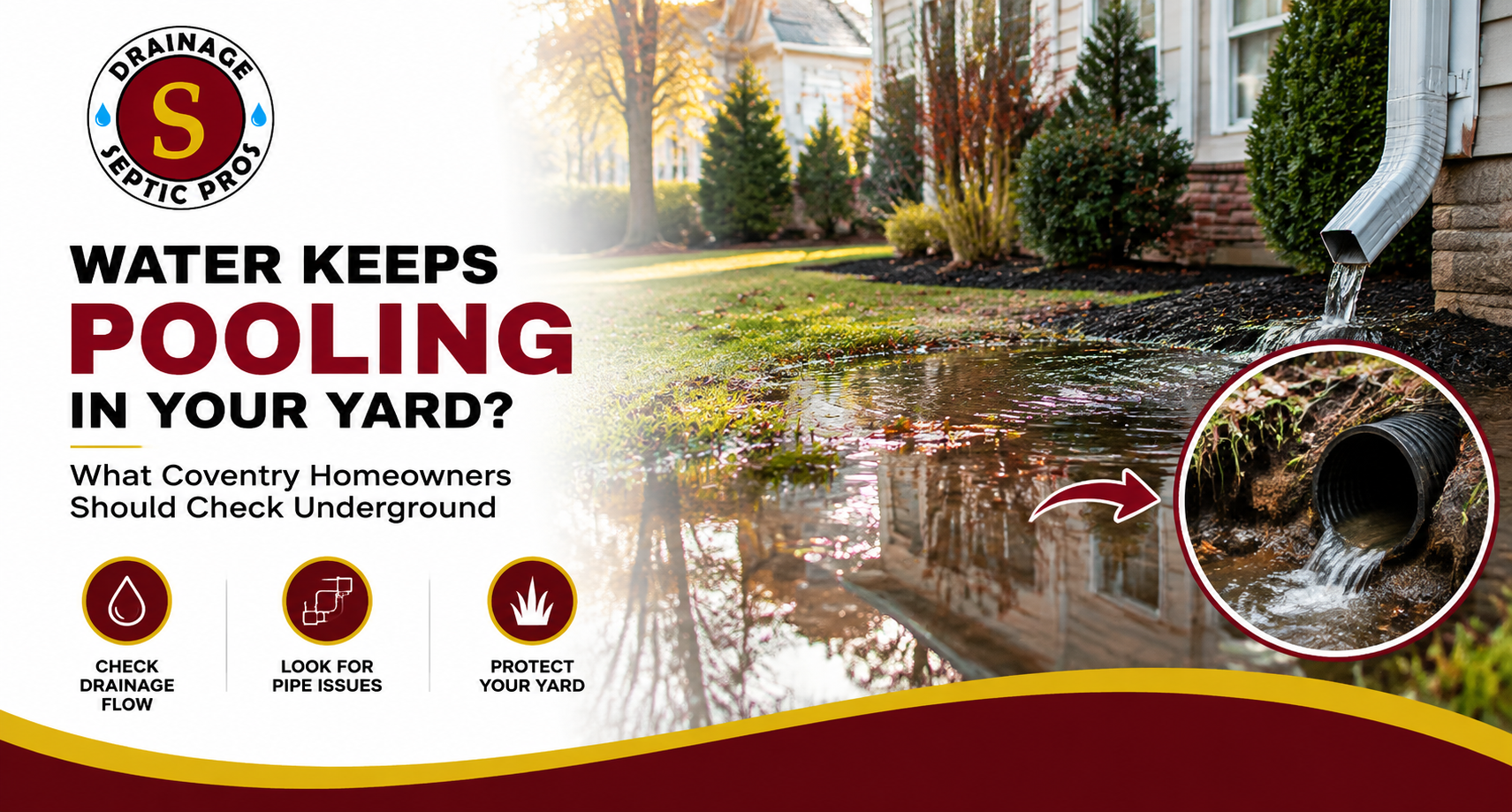
A yard that stays wet long after a rainfall can be more than just an inconvenience. Standing water can make outdoor areas difficult to use, damage landscaping, create muddy conditions, and sometimes point to a drainage problem below the surface.
For Coventry homeowners, it is common to notice water collecting after heavy rain, especially during seasons when rainfall is frequent and the ground remains saturated. While some puddles disappear naturally, water that repeatedly gathers in the same areas may indicate that something is preventing proper drainage.
Understanding what happens underground can help homeowners identify possible causes and know when professional evaluation may be needed.
Look Beyond the Surface Water
When homeowners see standing water, the first instinct is often to focus only on the visible puddle. However, the water on the surface is usually a result of what is happening below ground.
A drainage system is designed to move excess water away from areas where it can cause problems. If water cannot flow properly through underground pipes, it may have nowhere to go and eventually collect on the lawn.
Issues such as blocked pipes, damaged drainage lines, poor slope, soil changes, or improper water flow paths can all contribute to recurring pooling.
Check Where the Water Is Coming From
Before deciding how to fix a drainage issue, it is important to understand where the water originates.
Rainwater may come from several sources, including:
- Roof runoff from gutters and downspouts
- Water moving from higher areas of the property
- Poorly directed surface drainage
- Saturated soil after extended rainfall
- Problems with underground drainage systems
Observe your property during or shortly after rain if it is safe to do so. Notice where water first appears and which direction it travels. This information can provide important clues about the source of the problem.
Underground Drainage Pipes Can Develop Problems Over Time
Many homeowners assume that underground drainage systems will continue working without attention because they cannot see them. However, buried drainage pipes can experience issues over time.
Sediment, soil movement, tree roots, shifting ground, and physical damage can affect how well water moves through underground pipes. A pipe that was once functioning properly may eventually become restricted or damaged.
When drainage problems repeatedly return, the issue may not be the amount of rain but the condition of the system designed to manage that water.
Professional services such as Drainage Septic Pros help homeowners address drainage-related concerns and evaluate possible underground causes.
Signs Your Underground Drainage System May Need Attention
Standing water is one noticeable warning sign, but there are other indicators homeowners should watch for.
Possible signs of drainage problems include:
- Water collecting in the same area after every storm
- Slow drainage after rainfall
- Muddy or constantly wet sections of the yard
- Erosion around certain areas of the property
- Water moving toward the foundation
- Sinkholes or unusual ground changes
A single puddle after an unusually heavy storm may not indicate a major problem. However, repeated issues in the same location should not be ignored.
Tree Roots and Soil Movement Can Affect Drainage
The area beneath your yard is constantly changing. Tree roots naturally grow through soil, and ground conditions can shift over time.
Tree roots near drainage lines may enter small cracks or joints in pipes, potentially restricting water movement. Soil movement caused by weather changes, construction, or natural settling can also affect underground drainage systems.
This is one reason drainage problems may appear years after a property was originally built or after a drainage system was installed.
Check Your Property’s Grading
The slope of your yard plays an important role in how water moves.
A property does not need to look obviously uneven to have drainage issues. Small changes in elevation can cause water to move toward one area and collect there.
Landscaping projects, patios, walkways, additions, or soil changes can also alter the original drainage pattern. Adding soil or plants without considering water flow may accidentally create new pooling areas.
Proper grading and drainage planning work together to help direct water away from problem areas.
Why Ignoring Standing Water Can Create Bigger Issues
Some homeowners wait for puddles to disappear on their own. While occasional standing water may not create immediate damage, repeated pooling can affect the property over time.
Constant moisture can damage grass, affect landscaping, create erosion, and contribute to wet areas near structures. Water that remains close to a home’s foundation may also become a concern because moisture management is important for protecting the property.
Addressing drainage problems early can help prevent more complicated repairs later.
When Underground Drainage Repair May Be Needed
If surface solutions do not solve the problem, the cause may be located below ground.
Issues such as damaged, blocked, or improperly functioning drainage pipes may require professional inspection and repair. Homeowners looking for Underground drainage pipe repair Coventry, CT should consider having the drainage system evaluated instead of repeatedly treating only the visible water.
A proper assessment can help determine whether the problem involves the pipe itself, surrounding soil, grading, or another drainage factor.
Final Thoughts
Water pooling in your Coventry yard after rain is often a sign that water is not moving through your property as effectively as it should. While some puddles are temporary, repeated standing water can indicate an underlying drainage issue.
Homeowners should pay attention to where water collects, how long it remains, and whether the problem continues after normal rainfall. Understanding the possible causes—from grading and soil conditions to underground pipe issues—can help you make informed decisions about the right solution.
A properly functioning drainage system helps protect your yard, your landscaping, and your property from ongoing moisture problems.

Leave A Comment