- 2 Stearns Road-Suite A
- Storrs, CT 06268
- Business Hours
- Mon-Fri : 7am To 5pm

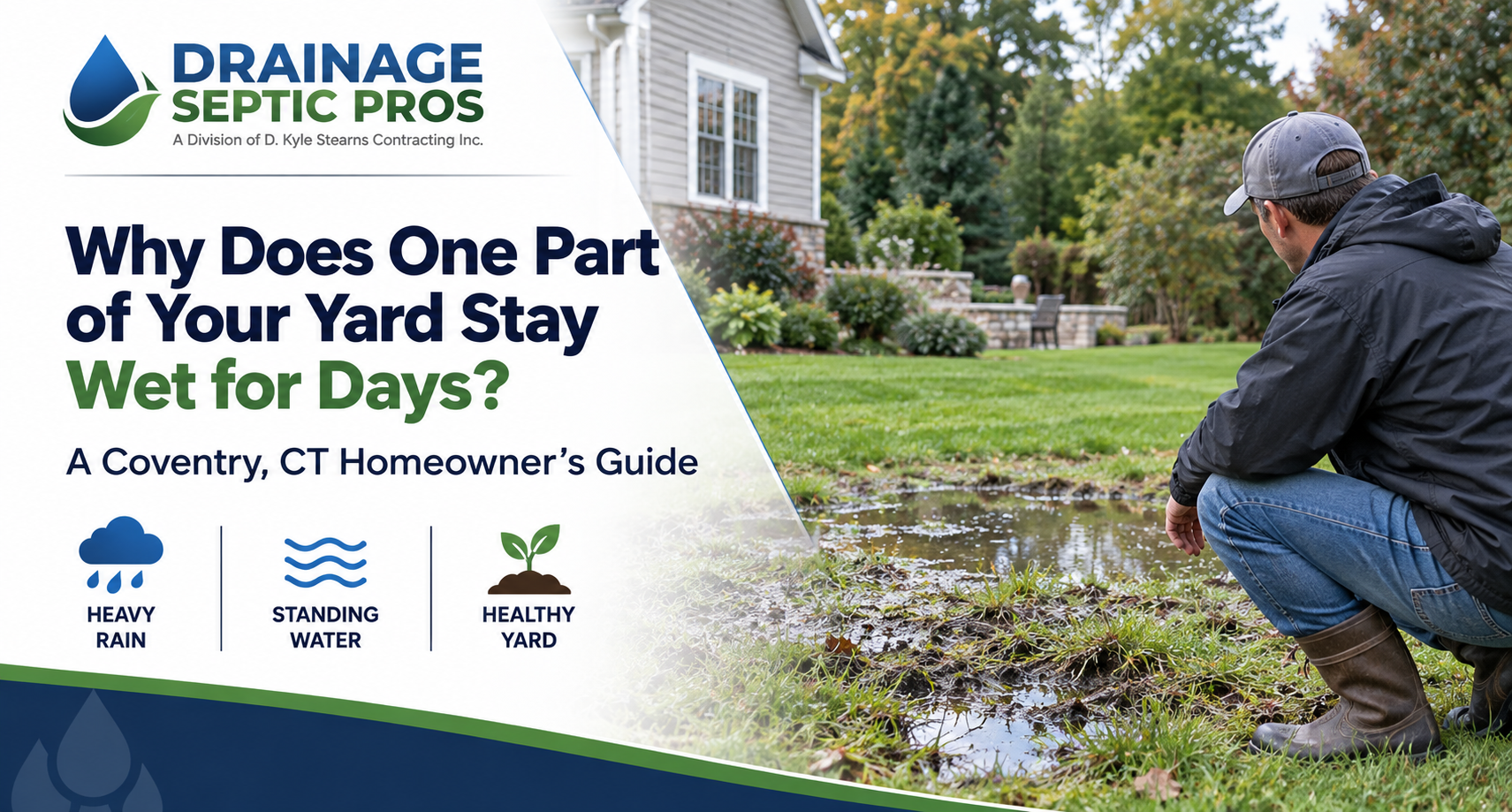
After a heavy rain, it is normal for a yard to be wet for a while. But what if most of your lawn dries within a day or two while one particular area stays soggy for much longer? You may notice soft ground, standing water, muddy patches, thinning grass, or an area you simply cannot walk across without sinking into the soil.
For Coventry, CT homeowners, a consistently wet section of the yard can be more than an inconvenience. It may indicate how water is moving across the property—or point to a drainage or underground system that needs attention. Understanding the possible causes can help you address the source rather than repeatedly dealing with the puddle.
Start by Watching What Happens After Rain
One of the easiest ways to understand a wet-yard problem is to observe the property during and after rainfall.
Where does the water come from? Does it run downhill from another part of the yard? Does it flow from a driveway, roof downspout, or neighboring area? Does the puddle appear quickly, or does the ground become wetter several hours later?
These details matter because not every soggy lawn has the same cause. Companies such as Drainage Septic Pros work with different drainage and septic systems, including catch basins, curtain drains, foundation drains, culverts, channel drains, septic systems, and underground piping. The right solution depends on understanding where the excess water originates.
Your Yard May Have a Low Spot
Sometimes the explanation is relatively straightforward: water naturally travels toward the lowest point of a property.
Even a yard that looks level can contain small elevation differences. If one section sits slightly lower than the surrounding ground, rainwater may collect there instead of continuing away from the property.
Over time, repeated pooling can leave the soil saturated and make it difficult for grass to stay healthy. The key is understanding whether the problem is simply surface grading or whether something else is contributing to the wet conditions.
Compacted Soil Can Slow Drainage
Soil condition can also affect how quickly water disappears.
Areas that experience frequent foot traffic, vehicle movement, construction activity, or heavy equipment may become compacted. When soil is tightly packed, water may have difficulty soaking into the ground naturally.
This can explain why one part of a lawn remains wet while nearby areas dry normally. Soil type, previous landscaping, and underground conditions can also influence how quickly moisture moves through a property.
Could an Underground Drainage Pipe Be the Problem?
If the wet area appears unexpectedly or has become worse over time, it may be worth considering what is happening below ground.
Underground drainage pipes can experience blockages, deterioration, shifting, or damage. When water cannot travel through the intended route, it may collect in the surrounding soil or appear at the surface.
Homeowners researching Underground drainage pipe repair Coventry, CT should remember that a wet patch alone does not prove a pipe is damaged. The location of the water, drainage layout, recent weather, and condition of the surrounding property all need to be considered before identifying the cause.
Look at Where Your Downspouts Send Water
Roof runoff can place a surprising amount of water into one section of a yard.
Check where your downspouts discharge during rain. If several roof areas send water toward the same low section, the soil may remain saturated long after the storm has ended.
Also look for disconnected extensions, damaged drainage connections, or areas where water flows back toward the house. Sometimes the wet lawn is simply the place where a larger runoff problem becomes visible.
Don’t Ignore Water Near the Foundation
A soggy area close to the house deserves additional attention.
Water that repeatedly collects near a foundation may indicate poor grading, concentrated roof runoff, or a problem involving an existing drainage system. The visible puddle may not necessarily be where the issue starts.
Rather than simply adding soil or covering the wet area, homeowners should first understand how water reaches that location. Changing the surface without understanding the drainage pattern can sometimes move the problem somewhere else.
Could It Be Related to the Septic System?
Not every wet area is a drainage-pipe problem. On properties with septic systems, unusual wetness around the septic or leach-field area deserves attention.
Possible warning signs can include persistent soggy ground, unusual odors, unusually green or lush grass in a concentrated area, or changes in how household drains are functioning. These signs do not automatically confirm a septic failure, but they should not be ignored.
Avoid digging into or driving heavy equipment over a suspected septic area. A professional evaluation is a safer way to determine whether the wet conditions are connected to the septic system or another drainage issue.
Why Simply Filling the Wet Spot May Not Work
When homeowners find a muddy depression, the first reaction is often to add soil.
That can sometimes improve a minor low spot, but it does not solve every water problem. If runoff continues flowing toward the area, an underground pipe is not functioning correctly, or drainage from another part of the property is feeding the location, the water may simply appear somewhere else.
A better approach is to identify the source, path, and destination of the water before deciding how to correct it.
Pay Attention to Changes Over Time
A wet area that has always existed may have a different explanation from one that suddenly appeared this year.
Think about recent changes. Was landscaping added? Was a driveway, patio, walkway, or addition installed? Were trees removed? Did a major storm affect the property? Has the wet area gradually expanded?
Changes like these can provide useful clues about what is happening.
Final Thoughts
One part of a Coventry yard staying wet for days does not automatically mean there is a serious underground problem. The cause could involve grading, compacted soil, roof runoff, drainage pipes, groundwater conditions, or a septic system.
What matters is recognizing a pattern. If the same area repeatedly stays soggy while the rest of the yard dries, it is worth understanding why.
Instead of treating only the visible puddle, look at how water enters the property, where it travels, and where it should eventually go. Finding the real source of the moisture can lead to a more practical and lasting solution.

Leave A Comment